Physician Workspace EMR
Built and launched a new physician EMR from idea to $8M ARR, creating a new product line that expanded PointClickCare into the $200M long term care practitioners market.
Problem
PointClickCare dominated skilled nursing facility EMR market, but that market was saturating and we looked to expand into the physicians market. Physicians working in these facilities were maintaining separate EHRs, duplicating documentation across systems, and spending twice as much time in software as they did with patients. They called it "pyjama time," the hours after clinic spent finishing their notes. The opportunity was to enter the $200M adjacent market of physician EMR and strengthen the network effect that was core to the company's competitive moat. The real challenge was building a brand new product for a new market inside an enterprise company whose GTM engine, culture, and incentive structures were all optimized for the existing customer/market.
Approach
I pitched the opportunity, got approval to form two engineering teams, and took PW (code name for the physician EMR) from concept to $8M ARR with 20+ paying customers including the largest post-acute care institution and the largest hospital health system in the US.
Started by understanding the culture of the user, not just their workflow. I spent hundreds of hours talking to physicians, reading their communities on Twitter and Reddit, studying how they actually felt about EHRs. Most EMRs were designed by committee for compliance, and doctors resented them. I learned that practitioners in senior care are often independent contractors who move between facilities. They're closer to a consumer segment than an enterprise one, and they have real influence over purchasing. These insights led to a new design philosophy and go-to-market model that the company have not pursued before.
Design for flow, not features. The competing EMRs are cluttered with buttons and modal windows, distractions from their core documentation workflow. The physicians I talked to wanted to stay in the zone, finish their notes fast, and get back to patients. I formed conviction that the winning tool should felt like a writing tool rather than a medical records system. That drove our design philosophy about the interaction model and intentional simplicity in the MVP.
Prove traction for new GTM motions in a protected zone. My first attempt at launching with a product-led GTM motion caused organ rejection. The sales team, order-to-cash system, and implementation processes were all built for enterprise deals, which made a PLG model with self-serve onboarding feel threatening. I learned that innovation inside an established company needs an incubation zone. Rather than forcing the full vision, I built a tiger team of cross-functional champions, ran a stealth market experiment, and set a concrete goal of signing 15 paying customers to prove PMF before asking scaling real change in how teams typically worked.
What I built
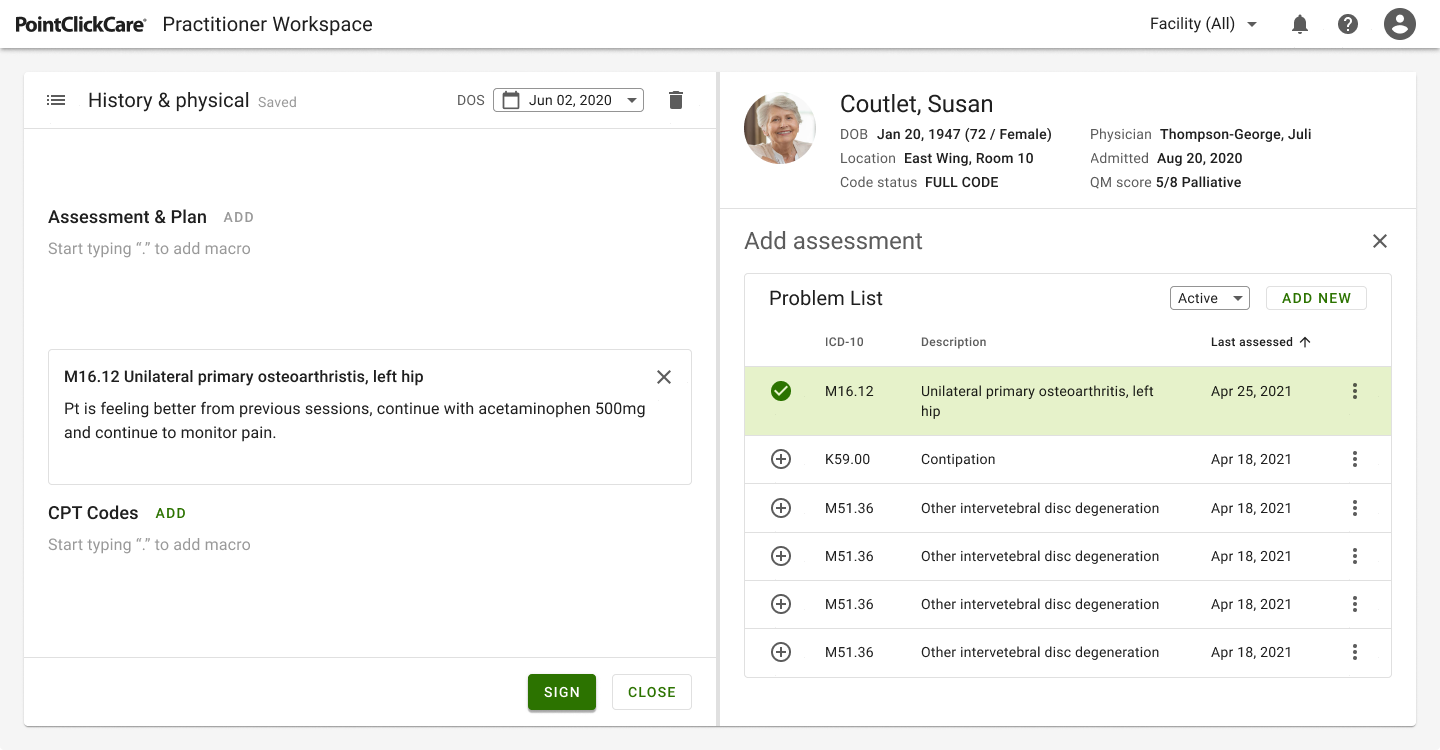
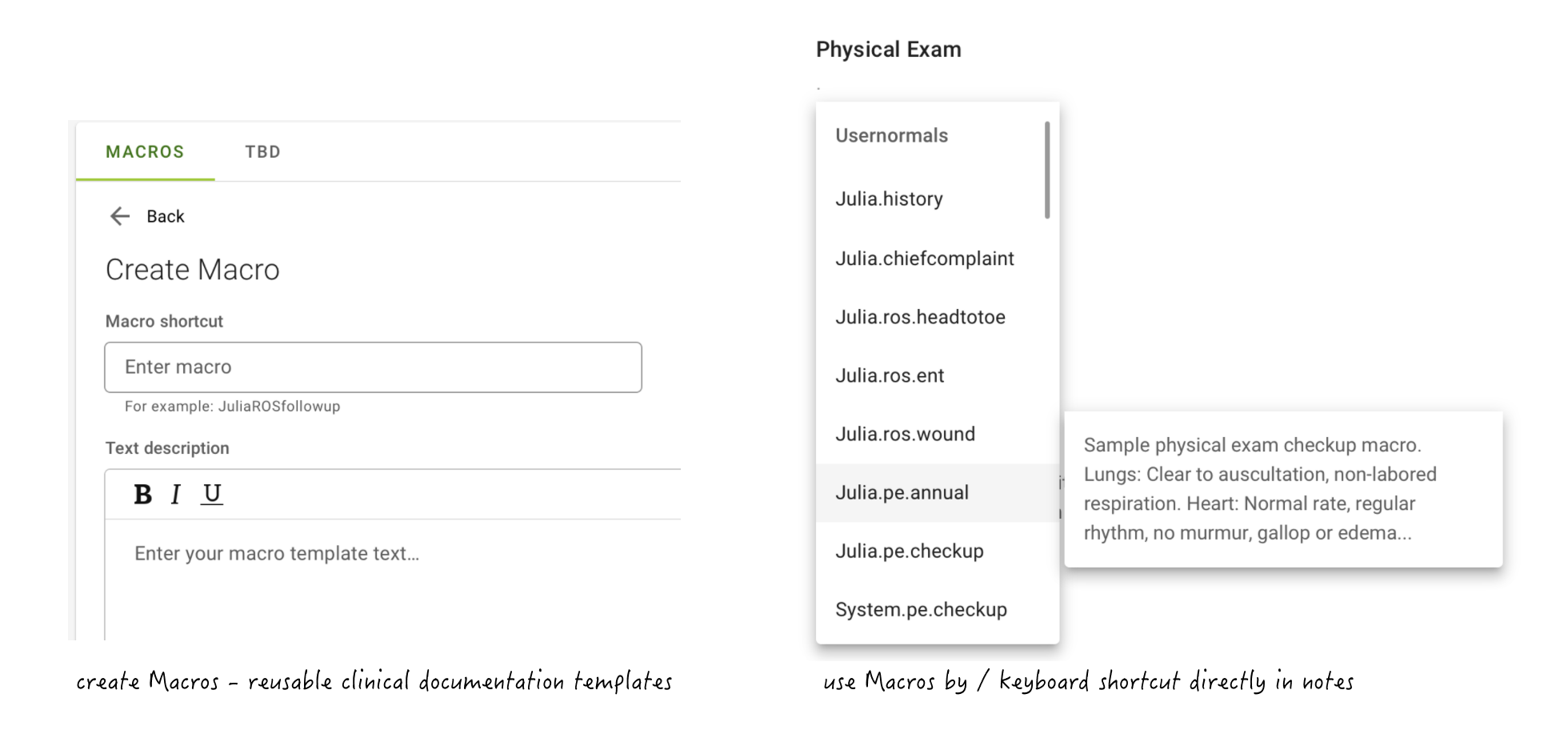
A keyboard-native interface that cut documentation time by half
In healthcare, tools tend to default to visual interfaces that optimize for discoverability over throughput. That's why EMRs are mouse-driven. But physicians are keyboard driven, they want speed. I built PW - the first keyboard-first physician EMR, inspired by tools like Notion and Superhuman.
- "Smart Compose" lets physicians trigger actions (macros, diagnosis codes, orders) with keyboard shortcuts inline while writing their notes.
- The standout feature was an ordering flow modeled on e-commerce: type an order, add it to a cart, sign everything at the end like "checking out" your cart.
- This approach cut documentation time by 50%. It eliminated the context-switching that was enforced by mouse-driven models, kept physicians in the flow to finish their notes faster.
A 40-group advisory panel that doubled as a product and growth engine
I defined a clear segmentation from the start, and recruited 40 physician groups as design partners throughout PW's development. The early lighthouse partners were the largest Long term care physician groups in the US.
- The partnership gave us quick iterations and insights to build the right and differentiated thing and won their trust.
- This panel also became the an organic sales pipeline. These groups often shared best practices with their network which drove strong word of mouth growth. Soon enough, my sales team was reaching out to me to ask about the beta (which I haven't even announced) because they were asked by new physician groups about this new product.
A stealth GTM experiment that proved PMF with 20 customers
After an initial PLG launch attempt caused organizational pushback, I formed a tiger team of cross-functional champions and ran a market experiment in stealth.
- I scoped my original "product led growth" ambition down to just activation.
- I personally ran sales demos, and iterated on positioning until we found the story that clicked.
- The experiment signed 20 customers (including the two largest health systems in the US), built an $18M pipeline, and created enough pull that the rest of the GTM organization came around to build this new engine with us.
Impact
| $8M ARR | New revenue stream from this new product line |
| 20+ paying customers | Including the largest post-acute institution and largest hospital health system in the US |
| $18M pipeline | Built through a stealth market experiment with a small tiger team |
| 2X faster documentation | Practitioners completing notes in half the visit time compared to separate EHR workflow |
| 2x activation rate | Product-led activation flow doubled the activation rate of our past apps for physicians |
| $180K/year saved | Regulatory feature built from public CMS data instead of vendor licensing |
| 40-member advisory panel | Deep customer partnership that served as both feedback loop and early sales pipeline |
What I learned
Product-GTM fit matters as much as product-market fit. I had a product that customers loved and a market that was pulling us forward, but my first GTM plan failed because it required organizational capabilities that didn't exist yet. Now when I evaluate new product opportunities, I assess the organization's readiness to sell and support the product with the same rigor I'd apply to assessing whether customers want it.
Infiltration is more effective than revolution. My initial instinct was to push for a grand vision from the start: new pricing model, self-serve onboarding, product-led growth across the funnel. The ambition was right but the approach was not. Revolution is scary and can antagonize people. It was more effective to scope down to the smallest provable slice (activation), run it as an experiment with a team of champions, and convince with the results. That led non-believers to go from blocking the initiative to asking how they could be part of it.
The best product insights come from understanding users' feelings. Physicians have a strong emotional relationship with their software: resentment. If we ran user research and analyzed their workflows on the surface, we'd be focusing on which screens to optimize. But understanding that emotional dimension deeply is what led to the keyboard-first design that differentiated PW.